



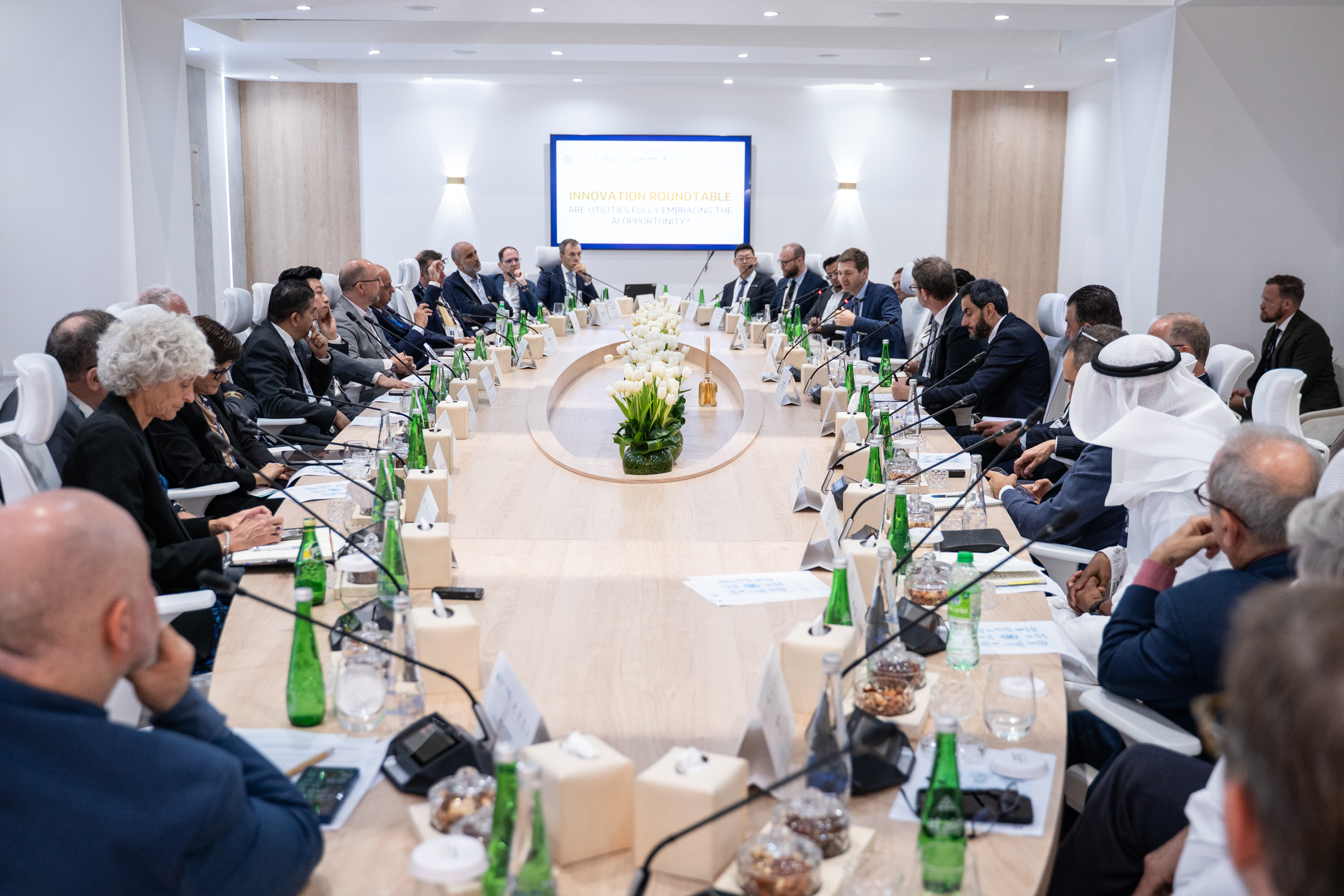
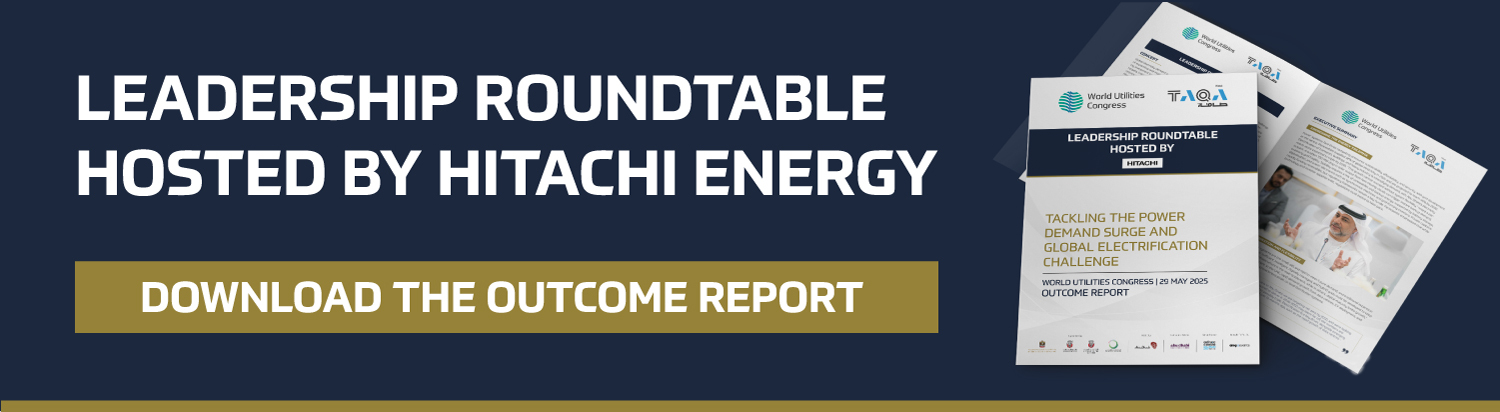
Our invitation-only Leadership Roundtables bring together C-level executives and policymakers for closed-door discussions on the trends transforming the utilities market. These sessions encourage open, high-impact dialogue to tackle key challenges, share insights, and shape the future of a cleaner, more secure energy sector.
Held under the Chatham House Rule, the roundtables offer unparalleled opportunities for strategic networking, collaboration, and actionable outcomes through shared reports and tangible takeaways.
 Tuesday, 19 May 2026
 13:30 - 14:45

This high-level leadership roundtable will focus on mobilising large-scale investment in electricity grid infrastructure to support the global transition to decarbonised and highly electrified energy systems. Bringing together policymakers, regulators, utilities, investors and system operators from Europe and the GCC, the dialogue will examine financing mechanisms, regulatory frameworks and new business models needed to accelerate grid modernisation, expansion and digitalisation.
Discussions will address the growing investment gap in transmission and distribution networks, opportunities for cross-border cooperation, and strategies to maintain affordability while attracting private capital. The roundtable will also explore partnerships that strengthen international collaboration and enable resilient, flexible and future-ready power systems.
Wednesday, 20 May 202614:30 - 15:45


This closed-door leadership roundtable will examine how rapid urbanisation and rising temperatures across the GCC are accelerating cooling demand and increasing pressure on electricity grids. With cooling accounting for a significant share of peak load, district energy systems offer a compelling alternative to conventional building-level air conditioning, delivering improved efficiency, long-term cost savings, enhanced reliability and reduced environmental impact in high-density developments.
The discussion will explore how policy and tariff reforms, innovative financing models and public–private partnerships can unlock investment, reduce risk and better reflect the system-wide value of district cooling. Participants will also consider the role of utilities, regulators and urban planners in embedding district energy solutions into sustainable, future-ready city design.
Thursday, 21 May 202611:00 - 12:15




dmg events is an international exhibition and conference organiser, publisher and information provider to the Energy, Construction, Plastics, Coatings, Manufacturing, Transport, Design and Hospitality industries.
Member of


