

A platform uniting global utility leaders to collaborate, innovate, and power progress

Delivering a just and equitable energy transition now demands not only system transformation, but resilience across every level of the global power system. As geopolitical tensions rise and supply chains become more contested, energy security has re-emerged as a central driver of policy and investment. Governments and industry are prioritising resilience, redundancy, diversification, and regional integration, while utilities sit at the center of this shift - balancing long-term system stability with the urgent need to decarbonise.

Electricity demand continues to rise, and the imperatives of security and system stability have never been greater. As economies expand, industries electrify, and digital infrastructure scales, power demand is accelerating rapidly. Meeting this growth reliably and affordably requires a pragmatic approach - one that recognises the role of all regions and generation sources, while accelerating the transition to lower-carbon systems. Delivering at scale will require coordinated investment across generation capacity, transmission networks, distribution systems, and enabling technologies, supported by greater cross-border connectivity and system interoperability.

As renewables and AI-driven data centres grow, networks must become more intelligent, flexible, and responsive - integrating distributed energy resources while maintaining system reliability and resilience. At the same time, pressure on water systems is intensifying. With global population and economic output set to rise significantly by 2050, water security is becoming an increasingly critical constraint - particularly in emerging and water-stressed regions. In the Middle East, many cities depend heavily on desalination, in some cases for up to 90% of supply. While this has enabled rapid development, it also creates systemic vulnerability, reinforcing the need for resilient infrastructure, regional collaboration, and shared resource strategies to ensure continuity of supply.

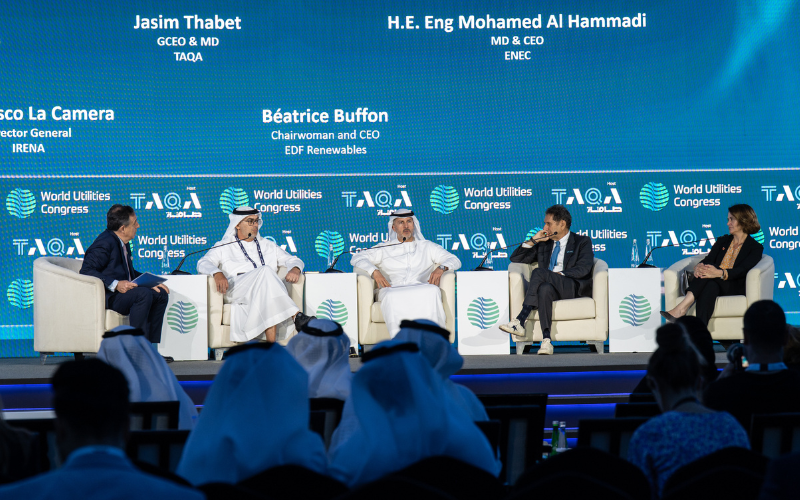
Under the theme “Empowering Tomorrow’s Utilities Today,” the Strategic Conference at the World Utilities Congress 2026 convenes global leaders and decision-makers to address these interconnected challenges. Focused on strengthening resilience, advancing regional grid integration, and fostering strategic partnerships, the conference aligns policy, investment, and innovation to define a clear roadmap for utility resilience - delivering secure, reliable, and sustainable power and water systems at scale.

Random Image

STRATEGIC CONFERENCE THEMES

SDG7 calls for affordable, reliable energy for all by 2030. While 92% of the global population has basic electricity access, 750 million people remain underserved. Geopolitical tensions and market volatility are reshaping energy systems, placing security, affordability, and energy sovereignty at the forefront of national priorities. Governments, regulators, and utilities must balance affordability, resilience, and decarbonisation while ensuring stable and diversified supply. Market design, regulatory frameworks, and targeted interventions will be critical to maintaining system stability in an increasingly volatile global energy landscape.

Water scarcity is a growing global concern, intensified by climate pressures and rising geopolitical tensions that place additional strain on critical natural resources. Nowhere is this challenge more acute than in the Middle East and North Africa (MENA), the world’s most water-stressed region. Across the region, desalination is not supplementary - it is essential to daily life. While it has enabled rapid development, it also creates strategic vulnerabilities by linking water security to energy systems and geopolitical stability. Improving water security scarcity requires demand management, regional interconnections, and stronger infrastructure resilience across integrated water–energy systems.

Global supply chains underpinning energy and utilities infrastructure are under increasing strain from geopolitical tensions, trade bottlenecks, and resource constraints. Dependencies on limited suppliers -from critical minerals to system equipment - pose significant risks to project timelines, reliability, and the resilience of critical infrastructure. Disruptions at key chokepoints can escalate rapidly, creating cascading bottlenecks across markets. In response, utilities and governments are prioritising diversification, localisation, and strategic long-term partnerships to secure access to essential materials and technologies. Strengthening supply chain resilience will be critical to delivering infrastructure at the pace and scale required, supported by coordinated international mechanisms and strategic industrial policy.

Global energy transition investment reached a record USD 2.3 trillion in 2025, rising by 8% from the prior year. The largest investment flows were directed toward electrified transport, renewable energy, and grid infrastructure, highlighting the central role of electrification in the evolving energy system. Despite this growth, grid investment continues to lag, posing an increasing risk to energy security. At the same time, geopolitical dynamics are reshaping capital flows, with increased state involvement, regional alignment, and evolving risk perceptions influencing investment decisions. Utilities must explore innovative financing models and partnerships to mobilise capital at scale and modernise critical infrastructure in an increasingly complex and fragmented global landscape. It is important to align capital with the direction of the system.

As the world enters the Age of Electricity, with demand accelerating faster than overall energy consumption and reshaping modern economies, resilience is becoming a defining feature of power systems. The systems underpinning the new energy economy are defined not only by what they produce, but by how well they withstand stress, manage volatility, and recover from disruption. In increasingly volatile markets, flexibility and speed are becoming key drivers of both reliability and profitability. In the Middle East, rapid demand growth makes this especially critical. Improving efficiency, enhancing flexibility, and deploying smart grid technologies will help manage peak demand, maintain reliability, and balance supply, while digital services enable greater consumer participation and system stability.

Renewable energy systems depend on innovation. Digital transformation enhances grid efficiency, increases the integration of renewables, and manages demand effectively. Progress in hard technologies, such as solar, wind, and energy storage, is crucial. Additionally, sensors, AI, and analytics are revolutionising energy production. Yet the systems required to support this transformation, from grids and data centres to governance frameworks and geopolitical alliances, are evolving far more slowly than the technology themselves. Unlocking the full potential of digitally enabled “new infrastructure” requires coordinated action across the value chain, supported by strategic investment, clear policy direction, and strong cross-sector collaboration.

Compute power is critical as AI grows. The scale of data centre investment is set to significantly reshape energy markets, with nearly $7 trillion in projected capital deployment by 2030, including around $1.3 trillion for power generation, cooling, and electrical infrastructure. This creates a sustainability paradox: a technology positioned as an efficiency enabler may also intensify carbon emissions, water demand from cooling, and grid stress if not carefully managed. Power systems already under strain must adapt quickly, as renewable capacity struggles to keep pace. Addressing these pressures will require integrated planning, innovation, and coordinated action across policy, finance, and infrastructure.

In an increasingly complex and uncertain global environment, policy and regulatory frameworks must evolve beyond stability to enable adaptability and resilience. Governments are playing a more active role in shaping energy and utilities markets, balancing national priorities with global climate commitments. Clear, consistent, and forward-looking policy frameworks are critical to unlocking investment and enabling long-term system planning. In a fragmented geopolitical landscape, stronger coordination across sectors and regions will be essential to deliver resilient, secure, and scalable infrastructure systems.

2026 SPEAKERS

Speaker-image
Jasim Thabet

Group CEO & MD

TAQA

Speaker-image
Christer Viktorsson

Director General

Federal Authority for Nuclear Regulation

Speaker-image
Bernard Fontana

Chairman & CEO

EDF

Speaker-image
Khaled Al Huraimel

Group CEO & Vice Chairman

BEEAH Group

Speaker-image
Dr. Javier Cavada Camino

President & CEO

Mitsubishi Power EMEA

Speaker-image
Beatrice Buffon

Chairwoman & CEO of EDF Power solutions, VP of EDF Group

EDF

Speaker-image
Loyiso Tyabashe

GCEO

South African Nuclear Energy Corporation (NECSA)

Speaker-image
Dr. Mostafa AlGuezeri

Group CEO

Intelligent Group

Speaker-image
Farid Al Awlaqi

CEO

TAQA Generation

Speaker-image
Dr. Pratima Rangarajan

CEO

Climate Investment

Speaker-image
Dr. Afif Saif Al Yafei

CEO

TAQA Transmission

Speaker-image
Eng. Hebah Abbas

Chairwoman

Kuwait Water Association

Speaker-image
Jeremy Crane

GCEO & Founder Board Member

Yellow Door Energy

Speaker-image
Dr. Nasser Saidi

Founder & Chairman

Clean Energy Business Council MENA

Speaker-image
Jay Sadiq

Founder & CEO

FortyGuard

Speaker-image
Omnia Halawani

Co-CEO & Founder

GRFN

Speaker-image
Noel Aoun

Group Chief Strategy Officer

TAQA Group

Speaker-image
Bilal Khursheed

Global Power and Utilities Leader

Microsoft

Speaker-image
Izumi Kai

CEO

JERA, Asia

Speaker-image
Omar Al Hashmi

CEO

TAQA Distribution

Speaker-image
Sylvie Jehanno

CEO

Dalkia

Speaker-image
Dennis Jol

CEO

AIQ

Speaker-image
Myrtle Dawes

CEO

Net Zero Technology Centre

Speaker-image
Fabrizio Fabbri

CEO

Ansaldo Energia

Speaker-image
Dalia Wahba

CEO

Hassan Allam Utilities

Speaker-image
Daniela Gentile

CEO

Ansaldo Nucleare SpA

Speaker-image
Michel Abi Saab

CEO

Emerge

Speaker-image
Luc Koechlin

CEO - Middle East

EDF

Speaker-image
Helmut Von Struve

CEO

Siemens Middle East

Speaker-image
Zehra Zeynep Dereli

CEO - ODAS CA & Member of the Foreign Investors Council

Energy Working Group, Uzbekistan

Speaker-image
Milo Alani

CEO - Middle East

Framatome

Speaker-image
Charles Mellagui

CEO - Cable Business Unit

Dubai Cable Company - Ducab

Speaker-image
Stefan Reisacher

CEO

Linxon

Speaker-image
Adrian Kershaw

CFO

TAQA Group

Speaker-image
Rahul P. Rao

CFO

Alkhorayef Water & Power Technologies

Speaker-image
Manish Pant

EVP International Operations

Schneider Electric

Speaker-image
Khaleefa Almheiri

Acting COO

MASDAR

Speaker-image
Amel Chadli

Gulf Countries President

Schneider Electric

Speaker-image
Allan Baker

Global Head of Energy Transition

Société Générale

Speaker-image
Yi Zhang

Deputy Director General

CNNC Group (MENA)

Speaker-image
Dr. Steve Griffiths

Vice Chancellor for Research & Professor

American University of Sharjah (AUS)

Speaker-image
Kenny Kitamura

Chief Representative Officer - Middle East

Japan Bank for International Cooperation (JBIC)

Speaker-image
Trideep Barua

Global Head of Infrastructure Segment, Electrification

ABB

Speaker-image
Faisal Ali Rashid

Senior Director – DSM

Dubai Supreme Council Of Energy

Speaker-image
Najeeba Al Jabri

Chief ESG & Sustainability Officer

Emirates Global Aluminum (EGA)

Speaker-image
Athmane Benzerroug

Chief Strategy, Transformation and Sustainability Officer

ADNOC Distribution

Speaker-image
Dr. Adnan Alhosani

Director of Electricity and Energy Trade Department

Ministry of Energy and Infrastructure, UAE

Speaker-image
Eng. Nawal Alhanaee

Director of Future Energy Department

Ministry of Energy and Infrastructure

Speaker-image
Eng. Ramiz Hamdan Alaileh

Executive Director

Regulation & Supervision Bureau, Dubai

Speaker-image
Andrew Sutherland

SVP

Copperleaf

Speaker-image
Ibrahim Ghosn

Executive VP, MEA

Veolia

Speaker-image
Steve Chengelis

VP - Energy Supply, Nuclear Development & Fusion

Electric Power Research Institute (EPRI)

Speaker-image
Prof. Phil Hart

Chief Researcher - Renewable and Sustainable Energy Research Center

TII

body-pattern

Member of